Brandcraft
Help! My stakeholders are killing my conversion rates
Why broad consensus is costing you clicks
Read more
Nice rebrand! Did Claude do it?
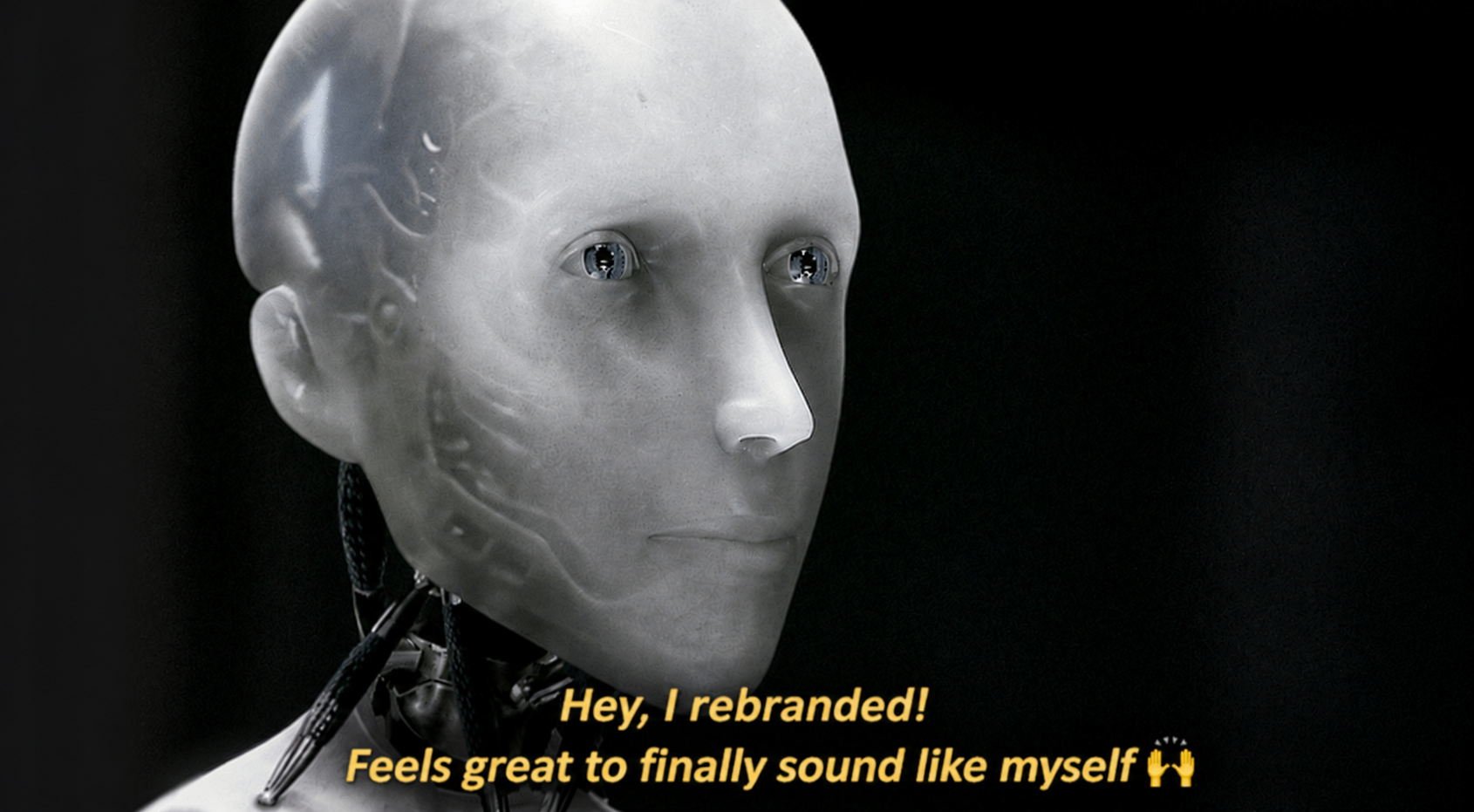
And so it begins.
A founder announces a rebrand, accompanied by the usual spiel: it's been a hard process, but we've finally arrived at something that truly represents our vision to be [empowering/connecting/platform/transformation]. Which sounds great, until you scratch a little bit under the surface
Claude.
And I get it. Claude will generate you a positioning statement and some nice looking font options before me or any other brand strategist have had a chance to even read your email. It feels like productivity and, even more perniciously, it feels like competence.
But there are a range of issues with AI that we’re all becoming increasingly aware of. Some I’m finding cross the spectrum across industries, and some are specific to branding. Here are the big ones:
Ultimately, Claude produces (very verbose) documents. Documents are cool and useful and everything, and they can feel like progress. But not all documents are real work, and not all real work is documents.
Indeed, the real work in branding comes from a whole spectrum of carefully constructed workshops, strategy and design work. It’s pulling from your reputation, diving into the emotional associations with your company, figuring out how you’re distinctive, making you remember-able (different from memorable, I promise), increasing salience, paying homage to the founding story while making way for new customers, and so on. Claude isn’t leafing through all, or eliciting any, of this. Claude is placing you right alongside the competition, because the competition is its entire frame of reference. And you don't want to sound or look like your competition, that’s kinda the whole point.
Of course, not everyone needs the deep excavation or the deep strategy work. If you're going to market fast to learn, or you just need something to get started, Claude might make total sense. An MVP brand is a real and legitimate thing.
But once you want to go further and you need people to actually choose you over a competitor with a similar product, you need to pay more careful attention to the fundamentals, and you need that messy human element. And you (or your team) need to do some actual thinking.
Anyway. I've tested Claude across the entire process. There are points where I've found it highly effective, points where it's immediately obvious it doesn't cut it, and - most painful of all - points where it seemed fine, but the frailty of the work got uncovered later. Sometimes by me, sometimes by clients, when it had made errors that simply wouldn't have happened if I was at the wheel. That's the seductive confidence of AI for you. It's wrong in the same tone of voice it uses when it's right.
Though to be fair, so am I. Ugh.
Here's an honest breakdown of how I think Claude can and should be used in a branding process:
A new client comes in and before the first call, we already have a full company and competitor breakdown thanks to our friend Claude. We do our own separate research to bolster it, but we can now go deeper on the first call rather than starting from scratch.
First up, create a skill that will scour the internet for competitors, background information about the company, LinkedIn profiles, Wikipedia pages etc. Ask Claude to put all that into a full company overview, a competitor breakdown, and a list of questions worth exploring on the first call in Notion. You should double-check it and add your own layer on top, but you can now walk into that first conversation already oriented rather than starting from scratch.
If you're a founder or in-house team doing this part, drop into the project folder all your customer interviews, recorded calls with your sales team and founding team, and any other interesting docs. The more context Claude has, the more useful the output.
Once the proposal is agreed, we turn it into a project board, contracts, tasks, a client home where they can see what's happening. This used to take at least half a day and now it's about an hour.
Paste in your full proposal and ask Claude to extract every deliverable, assign it to a project phase, estimate a rough timeline, and output it as a task list. Then ask our boy Claude to take that into Notion and build the project board from it. Claude and Notion work harmoniously: project dashboards, GANTT boards, emoji-filled tasks, the lot, from very little information.
If you're in-house you probably have a process already, but it's worth trying if you haven't. I’m also very sure Asana works well if you’re using that and not Notion.
Research is important, interviews are essential, and the kickoff workshop is critical. Whether you work with an agency or in your team, do not miss out on the workshop. The good thing about AI here is that it can record your workshop and create summary notes. But! Before you go off and let Granola run wild, a word of warning:
Do not trust the summary notes and leave it there.
Do not have your workshop and assume that what Granola pulls out actually captures everything important, because it does not. It will miss things. Really important things.
Save the full transcript. Run it through more than one AI, because each one will pick up different things. Ask each one specifically: what tensions came up that weren't resolved? What was said more than once? What seemed like a throwaway comment but probably wasn't? Then take all of those outputs and synthesise them together, alongside your own notes from the room.
Crucially, take your own notes during the workshop, because you will spot what the machines never will: the frustration in an answer that seemed straightforward on the surface, or the furrowed brow of your product manager when the founder says "we're just better!". Feed those observations back in when you're making the final synthesis - they're often the most important thing in the whole doc.
Side-note: the other thing synthesis gives you is a searchable record that pays off later. On a recent project, I half-remembered something a founder had said about the company being thirty-five years old. It was said in passing and I had almost forgotten it. I searched for it, found it buried in a side discussion from the kickoff, and it turned out to be the whole differentiating factor.
The detail had been sitting there the whole time and I'd totally missed it. Claude allowed me to very quickly explore my it’s-1am-I’m-still-awake-hunch a little deeper.
Once brand strategy and tone of voice are in place (which needs to be done by a human), Claude is good at turning all of that into a detailed sitemap - sometimes even wireframes, though tread with caution there.
Give Claude your brand strategy doc, your tone of voice, a crawl of the existing site, and three or four examples of site structures you admire. Ask it to propose a sitemap that reflects the positioning, clears out anything that doesn't serve the primary audience, and explains the logic behind each section. Use that as your starting point for the conversation with your designer or developer, not as the final answer. It'll get you 70% of the way there and save you some time staring at a blank screen.
Be careful with this one, because (as I found out the hard way) you still need to do some serious editing. That said, Claude is useful to use for a first draft.
Before you brief Claude on a single page, make sure your tone of voice doc, your messaging framework and your positioning statements are in the project and your homepage copy (and any other important page) is nearing its final incarnation. Then give Claude all of that, plus a clear brief for the page: what it's for, who's reading it, what they need to leave knowing. You can add the old copy just to give it more context.
Ask for a draft and then go in and correct what's wrong, fill in what's missing, and cringe at the vacant slop. The edit is still real work, but it's faster than starting from nothing.
Just don't let it near a page that matters until the pages that matter most are already done and locked.
This is the work I find quite dull and Claude seems very happy with. Technical SEO, missing metadata, structural gaps, all delegated. Thanks, Claude.
Once the site is built, give Claude a full page-by-page export and ask it to check for missing meta titles and descriptions, heading hierarchy issues, broken internal links, pages with no clear CTA, and anything that would trip up a search crawler.
A proposal at Moat isn't a template. It's a specific perspective on a specific potential client's problem, one we've begun to understand on the initial call and that is unique to every business. I don't trust Claude with the proposal because it simply isn't up to the task. The moment you're trying to communicate something that matters to someone who needs to be convinced, Claude's version will not be as sharp, as perceptive or as useful as yours.
Write it yourself, but use Claude to do the grunt work around it. Get it to pull together everything you know about the client into one place before you start: their site, their competitors, the notes from your first call. Then close the laptop and do some good old fashioned thinking.
Claude is good at synthesising data and it can find some pretty useful stuff in your interview transcripts, but there’s nothing like sitting across from a customer with a pen in hand and asking open-ended questions. Avoid the temptation to use the powers of AI to creative predictive audiences - they’ll just confirm your hunches and seduce you into a feeling of comprehensive analysis. Just 10 relatively unstructured chats with customers will be vastly more useful in trying to understand their needs and uncovering hidden gems for your strategy work.
Use your AI to piece together data from your website, search traffic, behaviour and synthesise any surveys you’ve sent out. But don’t let that fool you - speak with your customers! It’s the only way you know that the personas you’ve built are real people, not just assumptions.
I touched on this above but want to go deeper, because the transcript can capture what was discussed and yet miss so much of what really mattered.
Put simply, an exasperated sigh doesn't show up in your Granola notes, but it tells you everything about how someone feels. These are the distinctly human nuances that only you can pick up on, and they're often where the real juice is.
What AI also can't do is facilitate. Facilitation is an important skill in brand strategy, because you're not just trying to get one person's take, you're trying to engineer a conversation that moves the room from diagnosing the actual problem through to something everyone can at least democratically agree on as the direction. That requires reading people, managing dynamics, knowing when to push and when to let something breathe. Claude is not going to do that. It's just going to tell you you're a genius and your product is amazing. And y’know, maybe you are, and maybe it is. But you need your audience to agree, not Claude.
Design the workshop yourself, run it yourself, and be present for it. Think carefully about the questions you ask and the order you ask them in. If you're doing this internally, bring in someone whose job it is to listen rather than contribute. Record everything, take your own notes, and treat the AI summary/transcript as an appendage to your thinking, not a replacement for it.
Claude gravitates toward the most dramatic thing in the data. If you're selling mattresses, it'll find the customer whose bad back put them in hospital, note the miraculous recovery after purchase, and want to build the whole brand around it. Because look at this use case. Look at how it solved this problem.
But most people aren't buying a mattress because of their back, they're buying it because they want a good night's sleep. Claude doesn’t understand humans enough to grasp the difference between what people say drives their decisions and what actually does.
You can probably engineer your way around this with the right prompts and the right frameworks. But at that point, honestly, could you not just do it yourself and get a better result?
Use Claude to stress-test your positioning once you've arrived at it, not to generate it. You can even plug in some gurus (April Dunford, for example) and ask Claude to assess your work with reference to them. Useful, but again, tread with caution before you start polluting your clear, hard-earned thoughts with Claude’s sycophancy just for the hell of it.
Hard pass, Claude. As I said at the outset, Claude produces Claude templates. Bring it into creative direction and it will push you toward whatever examples you've fed it, without any of the nuanced thinking that makes creative direction actually work. It's not considering how your audience perceives the category. It's not thinking about internal perspectives on the company, or heritage, or what hasn't been done yet in your space. It's looking at your five reference images and trying to make a sixth one.
That's not creative direction.
It stifles the process, and it gives people who are eager for progress the feeling that something is happening, when actually a week of creative thinking would have been a week well spent.
Build your references the old fashioned way: getting inspired by other designers. Pull things that feel right before you know why they feel right. Leave Claude out of it.
These pages are your shop window. Having them feel like you didn't think hard enough to write them yourself, I just feel your more discerning users will feel it. It might not be a dealbreaker. But attention to detail is a signal that you care and - call me old fashioned - I think those signals make a difference.
Write a proper brief before you write a single word of copy. Who is this page for, exactly. What do they already think when they arrive. What do you need them to feel when they leave. What is the one thing this page has to do. Answer those questions in writing first, then write the page. Claude can help you pressure-test the brief, suggest structures, and draft sections for you to react to, but the brief is yours, the voice is yours, and the final version should only go live when it sounds like a human who cares wrote it. Again, hard earned lessons: been there, tried it, and the customer, the client and myself all felt queasy.
–
The pattern is clear enough and we’re all starting to sense it. Claude handles the scaffolding pretty well: research, structure, synthesis, QA, stuff you can automate etc. Check everything, but it's useful for these things.
What it can't do is the deep strategic and creative work that a truly successful brand requires. And that's not a problem you can engineer your way out of without spending serious time and resources building agents and prompts that are, by the way, depleting our waterways in the process.
If you’re a founder, save that money, save that time, put yourself to something more useful. Get yourself an agency, or get your team to take the charge and do the hard work.
Promise it’s worth it.